
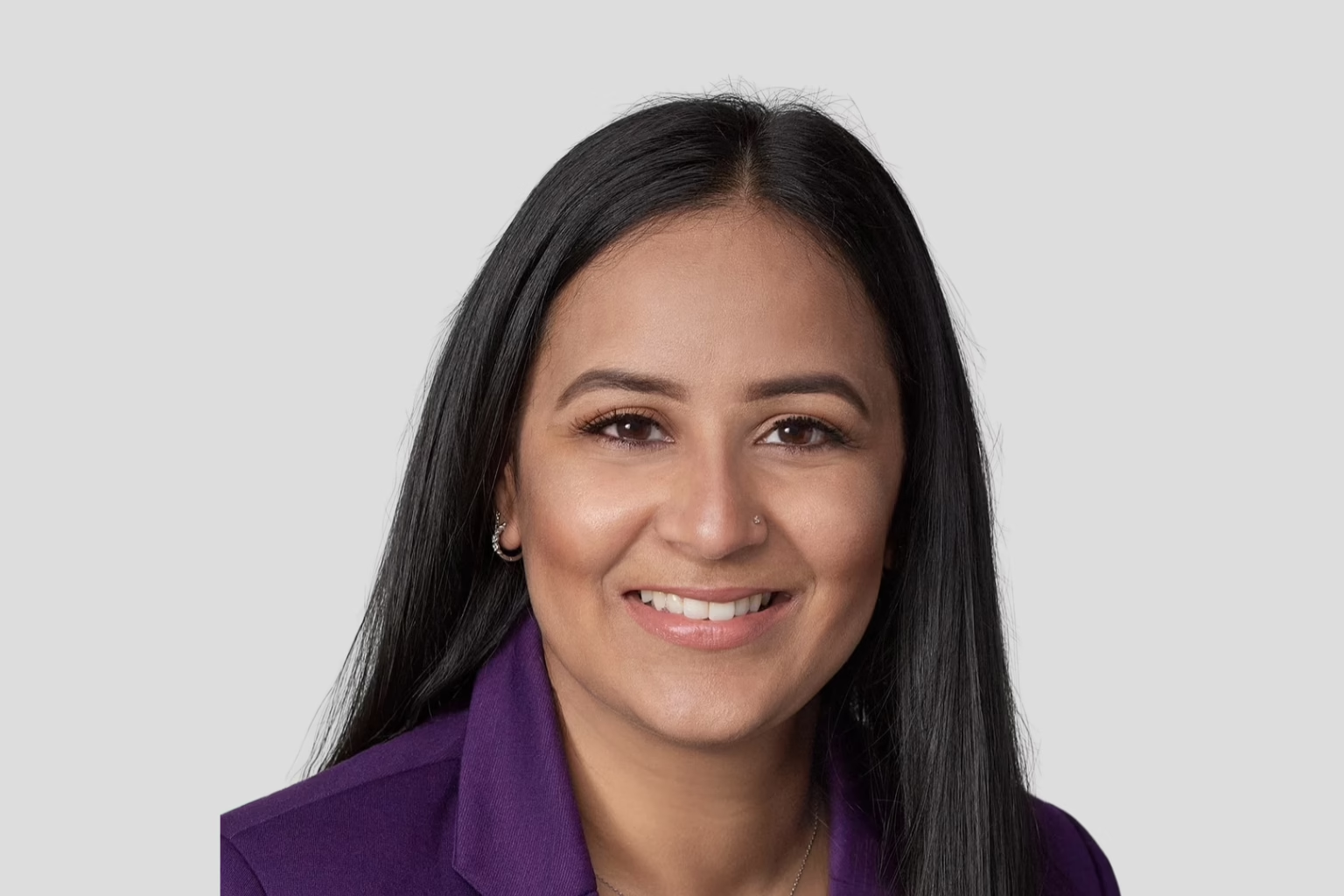
Nyla is a financial professional whose work bridges family law, forensic accounting, and business valuations. She holds an Honors Bachelor of Arts in Sociology and Economics from the University of Toronto and brings a multidisciplinary edge as a Licensed Paralegal, Chartered Business Valuator (CBV), Certified Divorce Financial Analyst (CDFA), and Family Dispute Resolution Professional (FDRP-Val).
As a trained collaborative practitioner, she champions alternative dispute resolution to foster clarity and fairness outside traditional litigation.
With extensive expertise in matrimonial matters, shareholder disputes, fraud investigations, and litigation support, Nyla is known for her meticulous financial analyses and expert reports that are frequently relied upon in mediation, arbitration, and court. In her current role, she delivers independent valuations and financial insight across a range of contexts, including matrimonial disputes, tax/estate planning, and complex litigation matters. Beyond her practice,
Nyla is an active voice in the professional community, contributing to thought leadership as an author and speaker while serving on the Board of Directors for the Family Dispute Resolution Institute of Ontario. Her commitment extends to volunteering with CPA Canada Tax Clinics, Habitat for Humanity, the Canadian Cancer Society, and various animal welfare causes, underscoring her dedication to both her profession and meaningful community impact.
We sat down with Nyla to learn more about her career journey and the unique blend of skills and passion she brings to her work. In this conversation, she shares how the CBV designation shaped her professional path, the human impact behind technical valuation work, and the advice she has for future CBVs.
How has the CBV Program supported your career development?
I started out in the legal field. During my studies, I became aware of the intersection between law, accounting, and dispute resolution. It wasn’t until my first job at a mid-sized accounting firm that I was introduced to the world of litigation support and the role that expert accountants play in legal disputes. That intersectionality really piqued my interest and made me want to dig deeper, so pursuing the CBV designation felt like a natural next step. Getting the designation gave me a solid foundation in valuation and financial analysis, which has been incredibly useful, not just in litigation work, but across different areas I’ve touched since. More than anything, it has opened a lot of doors. The designation has helped me build credibility and given me the tools to grow in ways I hadn’t originally expected when I started out.
Can you share a particularly challenging yet interesting valuation analysis that made you realize you had chosen the right career path?
Every valuation file brings its own unique challenges, no two are ever the same, which is one of the things I enjoy most about this work. If I had to highlight one, it would be a complex litigation matter that spanned several years, with financial records in complete disarray.
It took significant time and effort to make sense of the data and rebuild a coherent financial picture from the ground up. What made this file especially meaningful wasn’t just the technical challenge, though there was plenty of that, it was the human side of the work.
The client openly admitted they didn’t fully understand the implications of the missing or inaccurate financial information and felt overwhelmed by the entire process. As I progressed through the analysis, I realized this wasn’t just about arriving at a number; it was about helping bring clarity to a complicated situation.
It felt like solving a giant puzzle, and there was a real sense of satisfaction when everything finally clicked into place. After submitting the expert report, the client thanked me, not just for the work itself, but for helping them feel seen and understood in a system that can often feel impersonal. That moment reminded me why I chose this path.
As a CBV operating in a litigation realm, my role is to remain non partisan, but that doesn’t mean I can’t bring clarity and even offer a sense of control to those impacted by the process. That balance is what makes this work so meaningful to me.
What differences do you see in your current role as compared to your previous role?
In my previous position, I had exposure to a wide variety of valuation work, everything from shareholder disputes and personal injury claims to forensics, litigation, and valuations for tax and estate purposes. It was an extremely broad and valuable foundation. In my current role, I still do litigation support, tax-related valuation work, and shareholder disputes.
However, there’s now even more emphasis on leadership and contributing to the growth of both my practice and the CBV community. I also spend more time mentoring aspiring CBVs, which has been really rewarding. It’s a shift from not just doing the work but also helping shape the environment in which we work.
Do you have any tips for people looking to become a CBV?
Being a CBV isn’t a singular path, it’s what you make of it. The skill set that the CBV designation provides is one that transcends many fields: M&A, investment banking, tax, litigation, the list goes on. The materials and coursework are only the tip of the iceberg; they lay a foundation for a multitude of opportunities. If you’re pursuing this designation or even considering it, mentorship is invaluable. Find one or be one. Either way, you will grow.
Can you share a fun fact about yourself?
Aside from being a licensed paralegal in the province of Ontario, I’m also an avid, self-taught home baker. Even before COVID, I would religiously watch baking and cooking shows. It got worse during COVID because that’s all I could do!
I challenge myself to make a new or different baked dish at least once a month. I’ve made everything from full pies and layered cakes to French macarons.